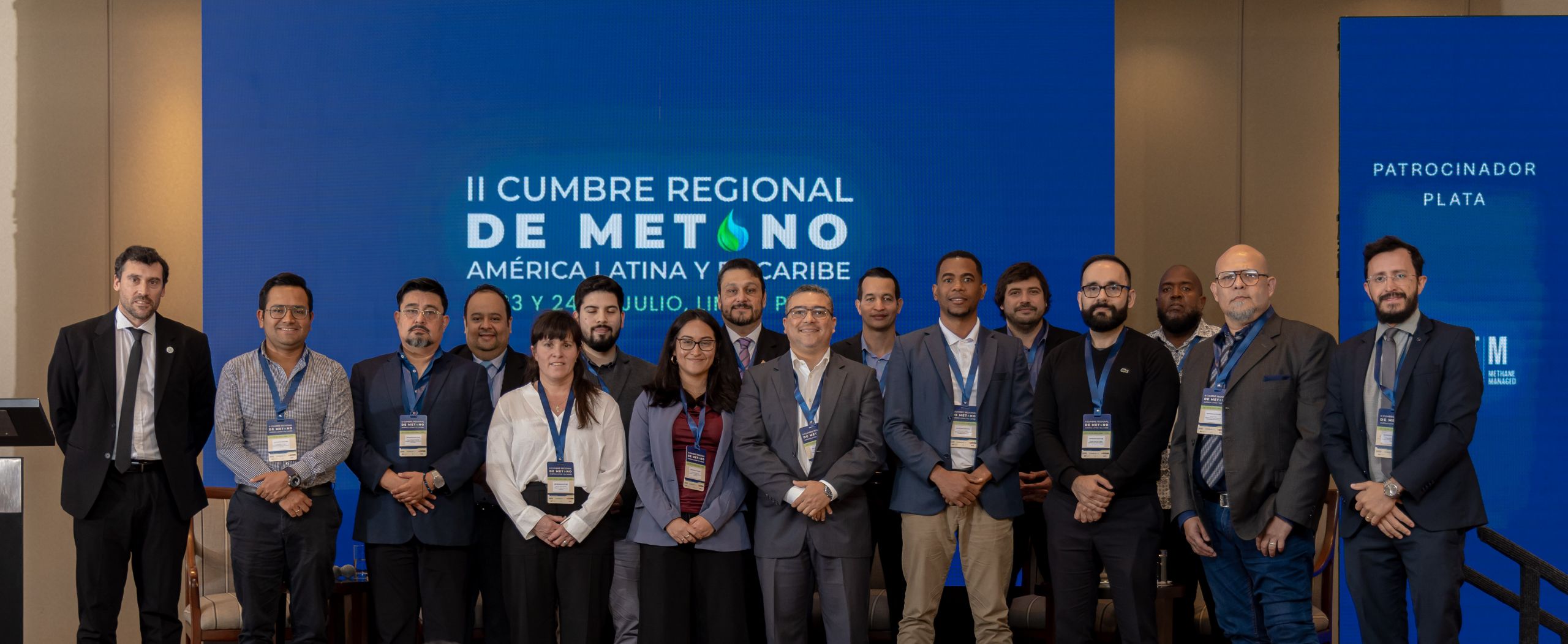



The II Regional Summit of Methane, held in Lima on July 23 and 24, brought together governments, companies, and multilateral organizations from Latin America and the Caribbean to discuss concrete actions for mitigation, regulation, and transparency in the energy sector—one of the main sources of fugitive methane emissions in the region.
The meeting took place at a strategic moment: countries are preparing to update their Nationally Determined Contributions (NDCs) ahead of COP30 in Brazil, while methane—which has a global warming potential 28 times greater than that of CO₂ over a 100-year period—is emerging as an immediate priority.
With nearly 220 people attending in person and more than 600 live stream views, the second edition was co-organized by OLACDE’s OEMLAC, Peru’s Ministry of Mines and Energy, the Global Methane Hub, CAF, and the International Energy Agency.
II Regional Summit of Methane
A region with data, technology, and political will
On that basis, the discussion centered on a consensus: the region already has the tools to accelerate the reduction.

From the perspective of regional governance, Andrés Rebolledo (OLACDE) emphasized that natural gas will continue to play a role in the transition, which is why decarbonizing the sector requires reliable metrics and a Methane Observatory to support decision-making. Regarding implementation and financing, Santiago Rojas (CAF) noted that the partnership with OLACDE is establishing a robust framework that unifies efforts across the region—a necessary condition for mobilizing investments and scaling up solutions.
From the outset, it was agreed that methane mitigation cannot be addressed in isolation. The contributions were organized around four cross-cutting themes: planning based on reliable and transparent data; climate financing and investment; and regulation and technological innovation applied to the measurement, detection, remediation, and control of emissions. The oil and gas subsector was the focus of attention due to its contribution to methane emissions.
In Peru, according to data from the Ministry of Energy and Mines, this sector accounts for approximately 13% of emissions from the energy sector, and within this sector, methane leaks account for around 90%. Deputy Minister of Electricity Iris Marleni Cárdenas noted that reducing methane is one of the most cost-effective strategies for complying with the Paris Agreement, protecting public health, and improving economic resilience.
“Latin America is leading the way in methane mitigation not because of a political stance, but because of economic benefits, sound principles, and confidence in free trade as a means of addressing climate change.”

Marcelo Mena
CEO of the Global Methane Hub (GMH)
II Regional Summit of Methane
Private Sector: Measurable and Replicable Progress
The Summit highlighted concrete progress and results achieved by the private sector.

Among the participants, SierraCol Energy reported that it achieved a 70% reduction in methane emissions over three years through an integrated system for measurement, flare control, and energy recovery. The company also noted that part of the gas that was previously flared is now used for electricity generation, through utilization and conversion technologies.
Petroperú, through its General Manager, Óscar Vera, presented the operational progress of the new Talara Refinery, which is equipped to capture, reuse, and reintegrate gas into its production processes. “Gas has both economic and environmental value. Optimizing its use not only reduces emissions, but also improves the system’s energy efficiency,” he stated.
For its part, EP PetroEcuador presented a project at the Bajo Alto plant, in Block Amistad, to reuse reject gas for electricity generation at Termogas Machala, preventing flaring and reducing emissions by 11,400 tCO₂-eq per year between June 2024 and July 2025.
Repsol Exploración Perú highlighted the exchange of good practices with operators and authorities in Africa, aimed at improving emissions management, with an emphasis on methane, and strengthening technical capacities.
In addition, Talanza Energy emphasized the need for multiscale approaches to detection and quantification, both top-down and bottom-up, as well as the role of data analysis in prioritizing cost-effective mitigation measures in the region.
From the industry association perspective, the National Society of Mining, Petroleum and Energy noted that incorporating natural gas into Peru’s energy matrix could lead to a projected 21% reduction in GHG emissions by 2030, with public health benefits and economic savings.
II Regional Summit of Methane
Transparency, Regulation, and Regional Cooperation
One of the most prominent points was the need to strengthen monitoring, reporting, and verification (MRV) systems.

Concrete examples were presented on satellite monitoring and government response to leak notifications, such as the case of the Government of the Province of Chubut, Argentina, in coordination with the Methane Alert and Response System (MARS) of UNEP’s International Methane Emissions Observatory (IMEO).
The contributions made by civil society organizations in Mexico, which are part of the Mexican Methane Emissions Observatory (OBMEM), were also presented, particularly in monitoring the implementation of and compliance with national regulations related to gas utilization and the development of mitigation programs across the value chain.
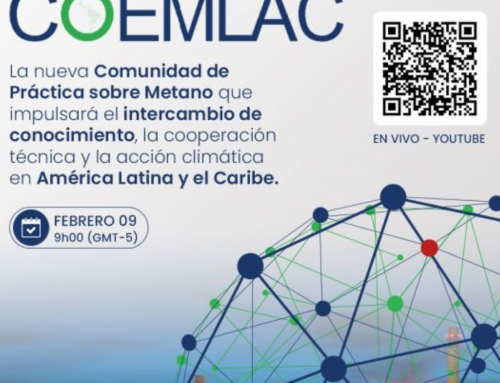
The progress made by OEMLAC since the first edition of the Summit was also presented, highlighting the launch of its website, the creation of the Methane Community of Practice (COEMLAC), and the publication of the regional methane emissions dashboard.
On the regulatory front, it was emphasized that the region needs common, standardized, and harmonized regulatory frameworks, as well as more spaces for dialogue to strengthen parliamentary action on methane mitigation.
The discussion also addressed new international regulatory frameworks that pose challenges for Latin America, such as that of the European Union, requiring countries to anticipate transparency and certification requirements for exported gas in preparation for its commercialization in the short term.
Exchange Spaces and Closing Session
During the development of the agenda, parallel spaces were also held, fostering dialogue among parliamentarians from nearly 13 countries and revealing their interest in promoting legislative initiatives to contribute to climate action efforts on this issue. These spaces also enabled joint work among focal points and delegates from 17 countries and multilateral organizations to identify shared management gaps and opportunities.
Undoubtedly, the Second Regional Methane Summit became a space for disseminating progress and innovative solutions, identifying persistent needs and challenges in the region, and fostering a conversation enriched by multiple perspectives. The message was clear: for methane to stop being an overlooked gas and become a climate priority, action must begin now, through credible, transparent, and regionally coordinated measures.