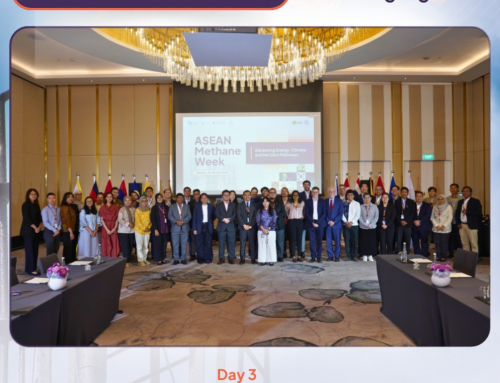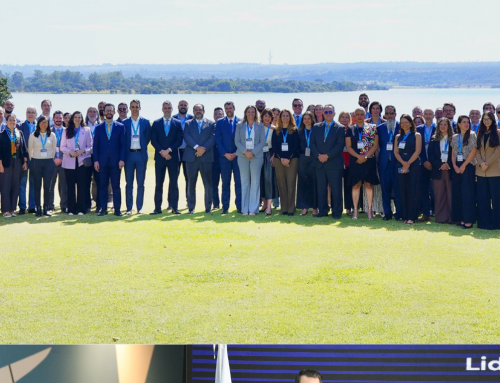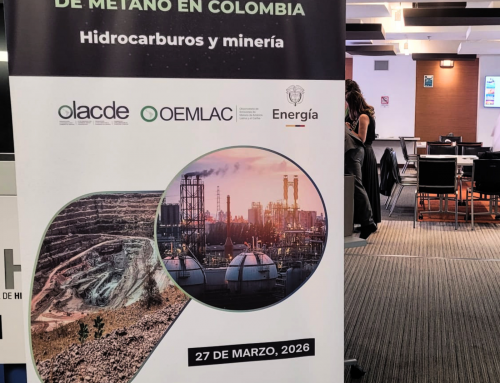


The Methane Emissions Observatory for Latin America and the Caribbean (OEMLAC) held the training course “Methane and Climate: The Science of Methane and Its Contribution to Climate Change,” its first open training program, aimed at strengthening technical capacities in the region for understanding, managing, and mitigating methane emissions.
The initiative drew 480 registered participants from the public and private sectors, academia, international organizations, and civil society, representing countries in Latin America and the Caribbean, Europe, and Southwest Africa. The diverse range of participants included professionals working in fields such as climate change, access to energy, hydrocarbons, energy planning, energy efficiency, electricity, renewable energy, and gender, reflecting the interdisciplinary nature of the subject matter.
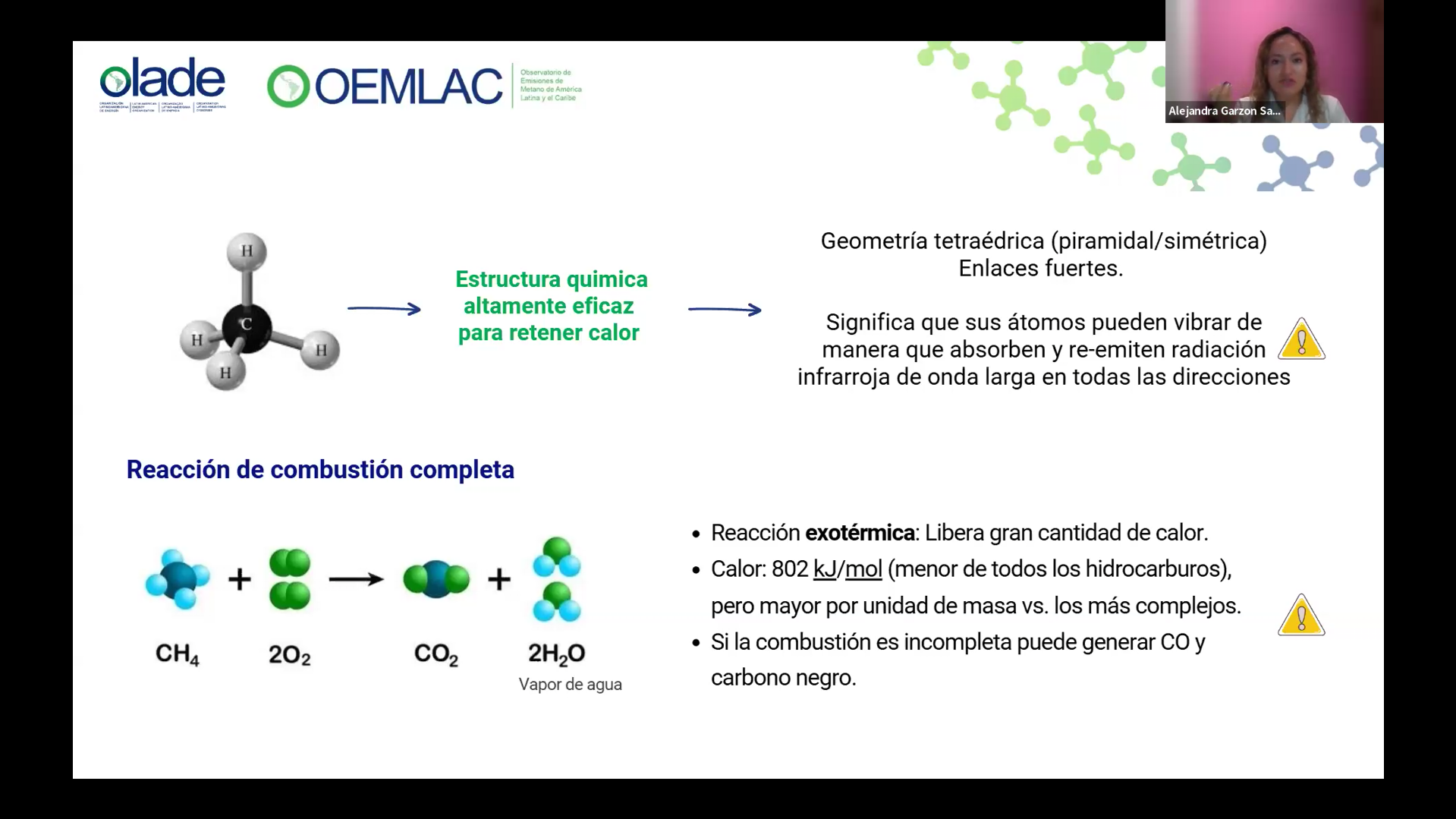
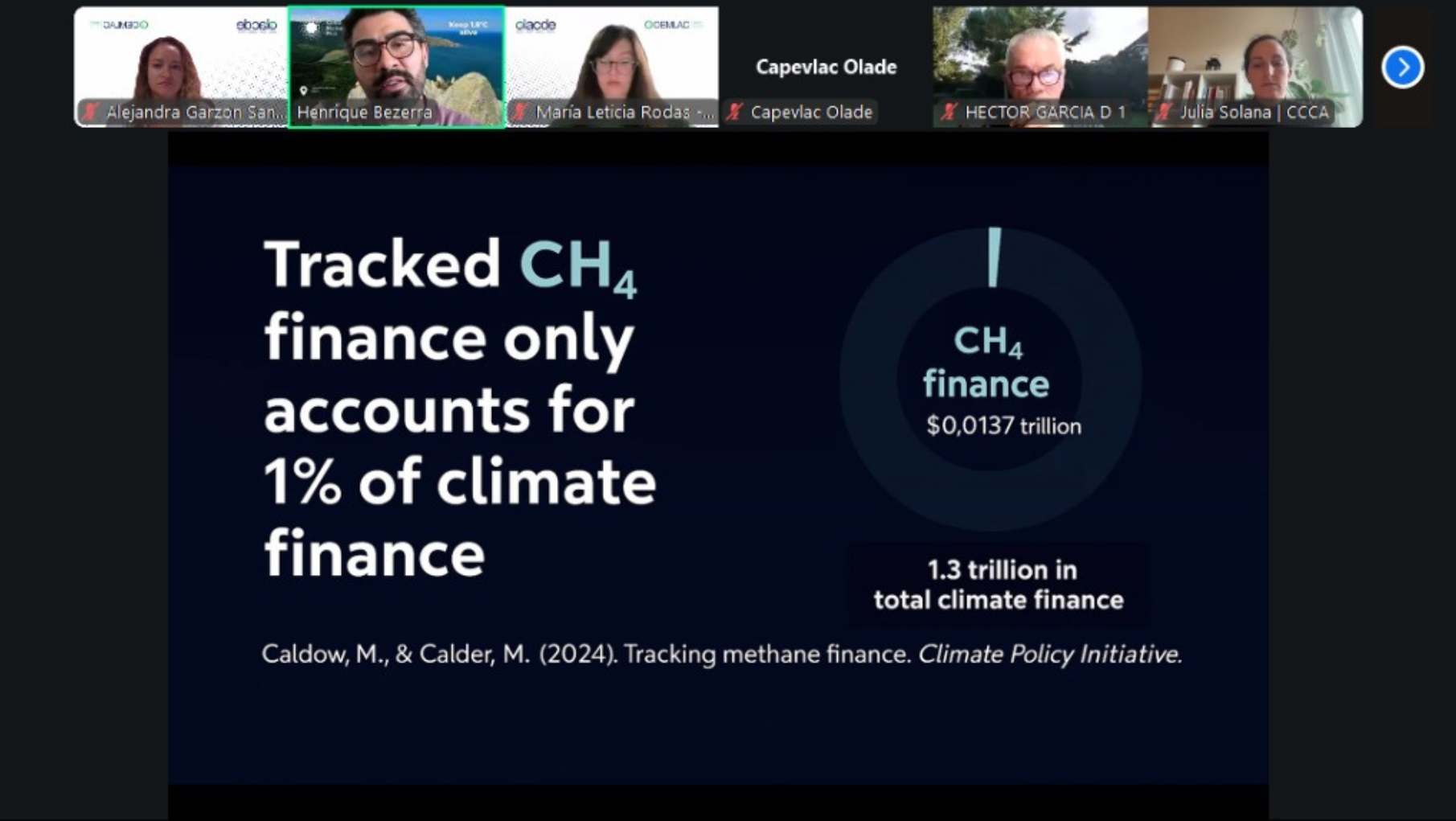
The sessions were held virtually through CapevLAC, OLACDE’s Energy Training Platform for Latin America and the Caribbean, as part of OLACDE’s 2025 Executive Training Program, funded by IKI and the Global Methane Hub (GMH), the main sponsor of the initiatives carried out by OEMLAC.
These sessions were led by Alejandra Garzón Sánchez, Technical Coordinator of OEMLAC, with the participation of Henrique Bezerra, GMH’s Regional Director for Latin America. Together, the sessions provided a comprehensive overview of the science of methane, the causes of methane emissions, their climate impacts, and the main regional and international initiatives currently underway to mitigate them.
Over the course of three virtual sessions, totaling 6 hours of training, an average of nearly 100 people participated in each session. The course remains available on the CapevLAC platform as an open-access resource for the region, and it will soon be available on this website. A second part is also planned for 2026, with the aim of delving deeper into technical content on the implementation of measures and technologies to reduce methane emissions in the energy sector.
Each meeting yielded key takeaways for the regional agenda. The main messages are highlighted below:
- Methane is considered a super-pollutant, with a significant contribution to climate change. It is the second most important greenhouse gas after CO₂ and has a global warming potential 82.5 times greater over a 20-year period.
- Understanding the chemical and biological dynamics of methane is key: natural sources require monitoring, conservation, and research, while human-made sources demand concrete measurement and mitigation actions.
- 60% of methane emissions are anthropogenic, mainly from the agricultural, energy, and waste sectors.
- The analysis of polar ice cores has made it possible to trace global methane emissions over hundreds of thousands of years.
- Today, advanced measurement and monitoring tools are available, such as specialized satellites, airborne spectrometers, cameras, and portable sensors, allowing emissions to be tracked at global, regional, and local scales.
- The agricultural sector is the largest contributor to methane emissions globally, accounting for nearly 42%, followed by the energy sector (38%) and the waste sector (20%).
- According to the International Energy Agency, in 2024, around 145 Mt of methane were emitted in the energy sector. Within the energy sector, oil production is the main contributor (32%), followed by coal mining (28%) and gas production (25%).
- Challenges remain in estimating emissions from abandoned or non-operational facilities in the oil, gas, and mining industries.
- Hydroelectric reservoirs contribute between 1% and 7% of global anthropogenic methane emissions, with a greater contribution in tropical regions.
- Bioenergy accounts for nearly 14% of global methane emissions, mainly due to the traditional use of biomass and, to a lesser extent, industrial leaks.
- Most new methane emissions will occur in contexts without specific policies or regulations; voluntary frameworks will not be sufficient to achieve mitigation targets.
- Natural gas is considered a transition fuel in some contexts, but methane leaks along the value chain can slow down decarbonization if they are not properly managed.
- Methane mitigation is the “emergency brake” of the climate crisis; a 40% reduction could limit global warming by around 0.3°C by 2040.
- In Latin America, cities such as Rio de Janeiro stand out for integrating circularity and mitigation in the waste sector, generating local employment, reducing food waste, and promoting biogas production.
- Reducing methane emissions could avoid climate damages estimated at USD 8.3 trillion annually by 2050 and prevent around 4.2 million premature deaths globally.
Through this initiative, OEMLAC continues to advance its mission of supporting regional capacity building as an enabling condition for promoting concrete actions to mitigate methane emissions in Latin America and the Caribbean.