

Establishment of OEMLAC
The Methane Emissions Observatory for Latin America and the Caribbean (OEMLAC) emerged as a strategic response to the growing need to strengthen knowledge, commitment, and action regarding the climate impact of methane emissions and the opportunities for mitigation in the region’s energy sector.
2022
December
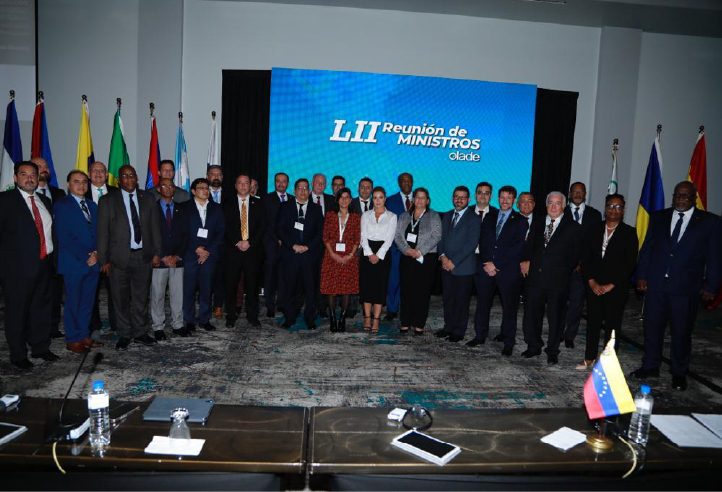
52nd Meeting of Ministers of the Latin American and Caribbean Energy Organization (OLACDE)
Its establishment was approved as part of the ministerial decisions of the LII Meeting of Ministers of the Latin American and Caribbean Energy Organization (OLACDE), held on December 15, 2022, in Panama, within the framework of the seventh edition of the Energy Week, with the aim of supporting the identification of technical needs for the collection, monitoring, and supervision of information on methane emissions in support of their methane emission reduction commitments.
2023
October
52nd Meeting of Ministers of the Latin American and Caribbean Energy Organization (OLACDE)
In October 2023, the first phase of OEMLAC was launched, with the formulation of its strategic framework and the definition of its action plan for the period 2023–2026. The result made it possible to access financing through the Global Methane Hub for its activation and stabilization.
2024
March
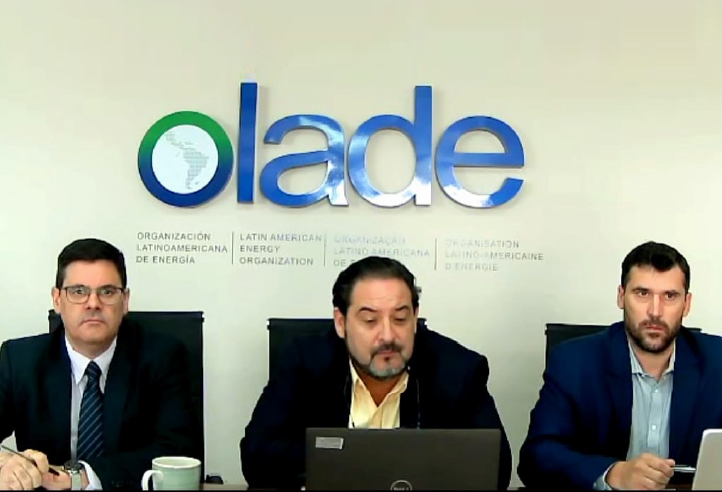
Official launch led by the Executive Secretary of OLACDE
In March 2024, the second phase of OEMLAC began and its official launch took place, led by OLACDE’s Executive Secretary Andrés Rebolledo, who highlighted that, through OEMLAC, “We will be able to chart the path toward the development of a low-emission natural gas industry, which will involve the elimination of methane throughout the value chain, along with the decarbonization of its production and the use of its by-products.”
2024
August
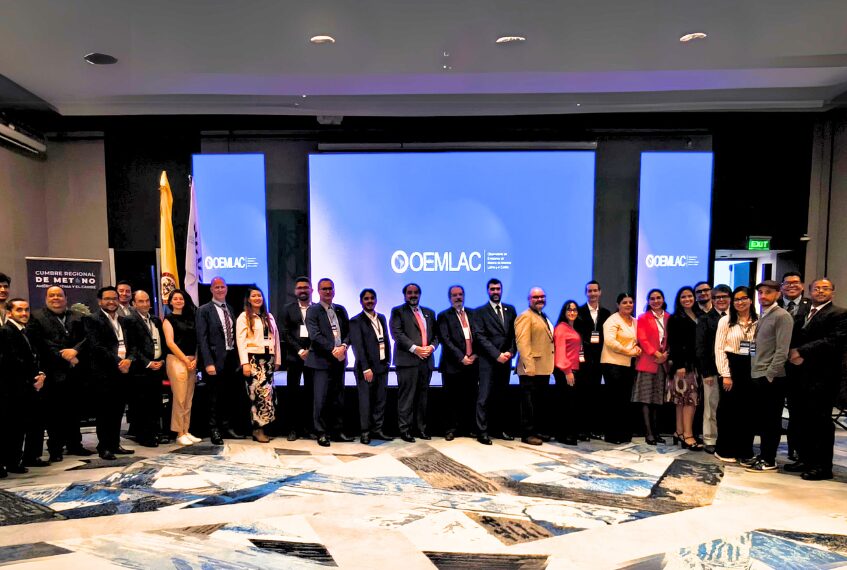
I Regional Summit of Methane 2024
Since its creation, OEMLAC has evolved into a regional cooperation model that currently involves 22 countries with 39 technical focal points, equivalent to 93% of natural gas production in Latin America and the Caribbean.
Its implementation has progressed steadily, notably through the establishment of strategic alliances with international organizations, the scientific community, and the private sector, as well as the creation of spaces for dialogue and coordination, among which the Regional Methane Summit stands out.
2024
April
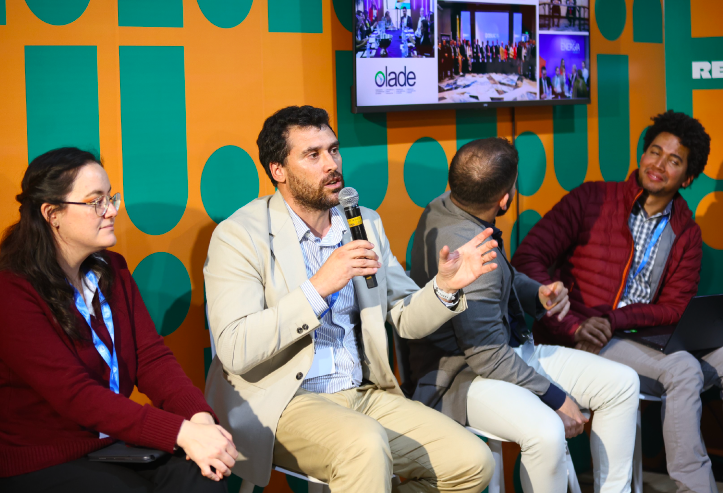
Gastón Siroit, Director of OEMLAC at COP29
In addition, OEMLAC has participated in key regional and international discussion forums, such as COP29, Energy Week, the Naturgas Congress, the La Jolla International Energy Conference, and the Meeting of Ministers of the Energy and Climate Partnership of the Americas (ECPA) to highlight the challenges and opportunities in climate transparency from a technical, multisectoral, and evidence-based approach.
2025
April
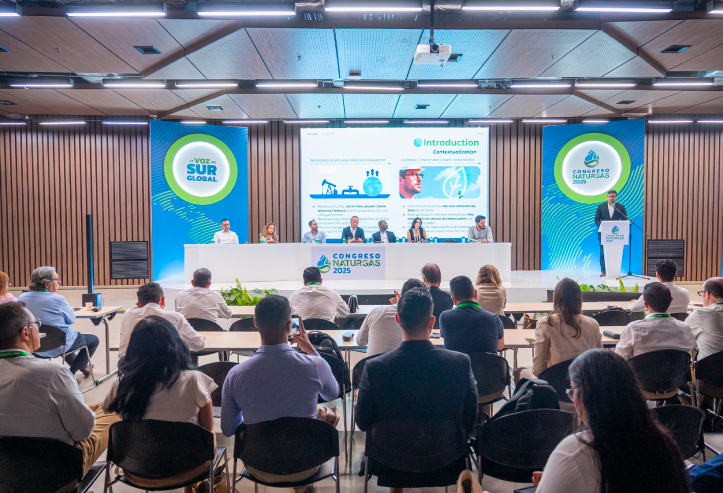
Naturgas Congress
During 2025, OEMLAC continues to participate in advocacy spaces such as the Naturgas Congress, advances in the development of an aggregated database of regional methane emissions, in the design of an interactive emissions dashboard, in the launch of the Methane Community of Practice (COEMLAC), in the preparation of the Second Methane Summit, and in the design of training programs aimed at the general public.
Strategic framework
MISSION
Strengthen the sustainable reduction of methane emissions in Latin America and the Caribbean by providing specialized technical assistance to national governments, oil and gas companies, and other relevant actors.
Through technical advice, methodological refinement, ongoing training, and coordination with financing mechanisms, OEMLAC seeks to facilitate the effective implementation of regional mitigation commitments, thereby contributing to more sustainable, transparent, and environmentally responsible energy development.
VISION
By 2030, OEMLAC aims to be the leading regional body promoting excellence in methane emissions management and reduction in the oil and gas sector in Latin America and the Caribbean.
OEMLAC aspires to be a global benchmark in effective coordination between governments, companies, and civil society, leading initiatives that promote the transition to a lower-emission and more resilient energy industry in the region.
Member countries
OEMLAC works closely with 27 of OLACDE’s member countries, promoting a coordinated regional approach to the adoption and implementation of policies, regulatory frameworks, and various actions focused on reducing methane emissions.
The participation of these countries, through their Energy Ministries and Secretariats, strengthens data transparency, regional integration, access to financing, and the adoption of effective strategies for methane reduction in strategic industries in the energy sector.
Strategic objectives
OEMLAC has designed an action plan geared toward fulfilling its mission, structured around three key strategic objectives, each with specific goals that guide its implementation and evaluation.
 Enabling countries in the region to understand and manage their methane emissions more effectively. OEMLAC works to ensure that countries in the region have methodological tools and reliable data for effective methane emissions management, through:
- Progressive refinement of the methodological consistency of national methane emissions inventories.
- Establishment of an aggregated database of methane emissions.
- Implementation of a regional methane information system.
These actions will improve the quality and accessibility of data, facilitating decision-making based on accurate and up-to-date information. precisa y actualizada.
Support and monitor national commitments to methane mitigation through the implementation of action plans and the strengthening of clearly defined regional capacities
OEMLAC not only provides measurement tools, but also supports countries in the planning and implementation of national strategies for methane emissions reduction through:
-
- Identifying technical needs in each country.
- Design of technical support routes for countries.
- Formulation of proposals for financing the support routes.
- Regional capacity building for methane emissions management.
This objective seeks to strengthen the role of countries in managing methane emissions by providing technical assistance and promoting the adoption of effective public policies and the implementation of strategic projects.
Provide global visibility and ensure accountability for regional methane mitigation efforts. Through:
- Consolidation of OEMLAC’s governance framework.
- Formalization of strategic alliances with key national, regional, and global organizations.
By strengthening its internal structure and collaborating with strategic actors, OEMLAC will ensure the continuity of its efforts in the long term.
Habilitar a los países de la región para comprender y gestionar de manera más efectiva sus emisiones de metano.
El OEMLAC trabaja para garantizar que los países de la región cuenten con herramientas metodológicas y datos confiables para una gestión efectiva de las emisiones de metano, a través de:
- Refinación progresiva de la consistencia metodológica de los inventarios nacionales de emisiones de metano.
- Establecimiento de una base de datos agregada de emisiones de metano.
- Implementación de un sistema de información regional de metano.
Estas acciones permitirán mejorar la calidad y accesibilidad de los datos, facilitando la toma de decisiones basada en información precisa y actualizada.
Apoyar y dar seguimiento a los compromisos nacionales para la mitigación del metano, mediante la implementación de planes de acción y el fortalecimiento de capacidades regionales claramente definidas.
El OEMLAC no solo proporciona herramientas de medición, sino que también acompaña a los países en la planificación e implementación de estrategias nacionales para la reducción de las emisiones de metano, a través de:
- Identificación de necesidades técnicas en cada país.
- Diseño de rutas de acompañamiento técnico a los países.
- Formulación de propuestas de financiamiento de las rutas de acompañamiento.
- Desarrollo de capacidades regionales para la gestión de emisiones de metano.
Este objetivo busca fortalecer el rol de los países en la gestión de las emisiones de metano, brindando asistencia técnica y promoviendo la adopción de políticas públicas eficaces y la implementación de proyectos estratégicos.
Brindar visibilidad global y asegurar la rendición de cuentas de los esfuerzos regionales para la mitigación del metano. A través de:
- Consolidación del marco de gobernanza del OEMLAC
- Formalización de alianzas estratégicas con organizaciones nacionales, regionales y globales clave.
Al fortalecer su estructura interna y colaborar con actores estratégicos, el OEMLAC asegurará la continuidad de sus esfuerzos a largo plazo.




Partners & Allies
Sources of cooperation
Strategic partners