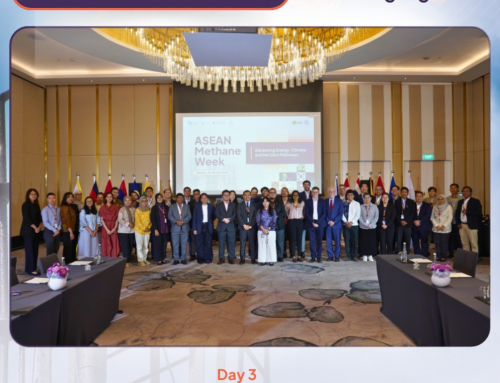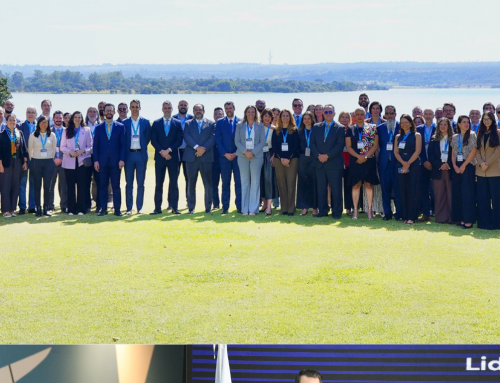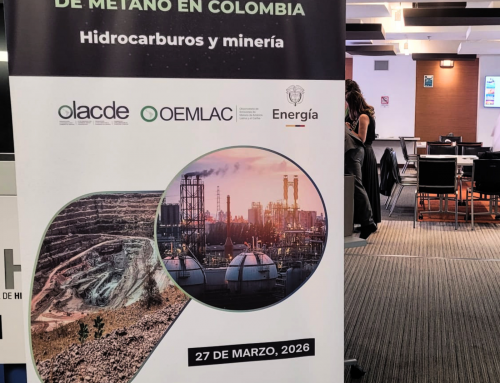


During the X Energy Week, OLACDE hosted a high-level session dedicated to one of the issues that has risen most rapidly on the global climate and energy agenda: methane. The organization brought together key voices from the fields of energy policy, international cooperation, data science, and civil society to explore how the region can move forward as a bloc toward a low-methane energy market. Learn more about the discussions below.
X Energy Week
Building a Common Framework for Methane Emissions in Latin America and the Caribbean
OLACDE’s OEMLAC, the European Commission, the Global Methane Hub, Carbon Mapper, and the IDEA Institute—a member of OBMEM—discussed how to move from assessment to the implementation of policies and standards that reduce emissions in the energy sector.
The first event began with remarks by Marcelo Mena (CEO of the Global Methane Hub), who recalled how, a few years ago, the discussion about phasing out coal in Chile paved the way for natural gas as a transition fuel. Today, thanks to methane measurements associated with oil and gas production, the picture is more complex: if leaks are not controlled, the climate advantage of natural gas could disappear, bringing its emissions closer to those of coal. The leakage rate can range from 0.05% in cases like Norway to values close to 4% in regions such as the Permian Basin in the United States—about 180 times higher—completely changing the assessment of gas’s role in the transition.
Mena emphasized that the European Union has already faced this dilemma when replacing coal-fired power plants with gas-fired ones and chose to set an emissions standard that limits methane leakage by 2030. The scope of that regulatory framework extends beyond its borders, because nearly 20% of the oil and gas emissions associated with the EU are generated outside its jurisdiction.
From that starting point, the session revolved around a central idea: Latin America and the Caribbean have the opportunity to develop their own regional methane standard—one that is aligned with science and the new demands of international markets, but designed with the region’s reality in mind. Mena noted that "If Latin America acts as a bloc—along with other major importers and producers—it can drive a virtuous cycle that combines economic benefits, low-cost emissions reductions, and greater resilience to climate impacts." Among the key arguments presented was the point that a regional standard could help prevent a temperature increase of about 0.1 °C and reduce annual climate-related damages by up to 2 trillion dollars, while protecting the water security of Andean countries and ensuring the planet remains insurable.
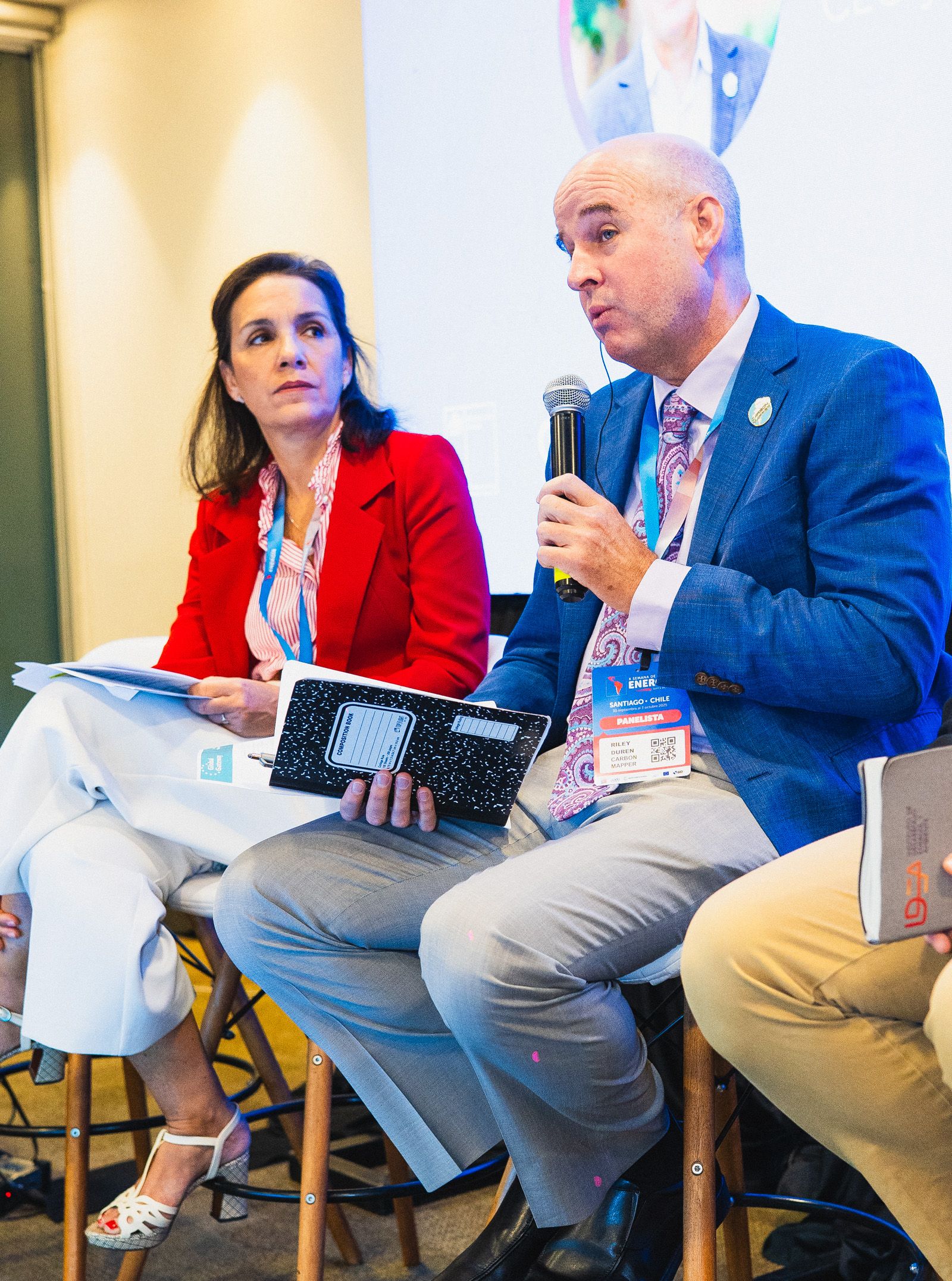
Following the technical presentation, Henrique Becerra (Regional Director of the Global Methane Hub) moderated a panel featuring Cristina Lobillo (Director of Energy Security and International Relations at the European Commission), Gastón Siroit (Director of OEMLAC at OLACDE), Riley Duren (CEO of Carbon Mapper), and Marco Jano Ito (Deputy Director of Research at the Institute for Development, Energy, and Environment (IDEA) of OBMEM). The discussion focused on the transition from the diagnostic phase to implementation.
Cristina Lobillo noted that the new European standards and OGMP 2.0 will be critical for accessing international markets, and that the region must begin preparing now to comply with them. Riley Duren emphasized the role of satellite data in quickly identifying and repairing high-impact leaks. Marco Jano shared Mexico’s experience, demonstrating how a National Observatory can connect government, academia, and civil society to ensure regulatory compliance.
OEMLAC’s work is supported by three pillars: acting as a regional bloc, sharing adaptable information, and organizing data from national inventories to make them comparable.
With 23 countries linked to OLACDE, 42 delegates representing 99% of gas production, and ongoing work on the design of mitigation roadmaps, as in Colombia, the region is building the technical and political foundations to certify low-methane-emission gas and design better regulations.
The panel agreed that the region has sufficient capabilities and partners to move forward; the key will be to align regulations, funding, and high-quality data to turn the methane agenda into concrete action.
X Energy Week
Exploring Opportunities for Convergence: Scientific Evidence for Action on Methane
A second session featured a study on how to align cooperation among regions, design national roadmaps, and strengthen governments’ capacity to translate assessments into concrete policies, regulations, and investments.
The session titled “Exploring Opportunities for Convergence on Methane Reduction between the European Union and Latin America and the Caribbean” was a specialized session in which the Stockholm Environment Institute (SEI) presented the results of its research on methane emissions in six countries in the region—Mexico, Costa Rica, Colombia, Brazil, Chile, and Argentina—offering a comparative analysis of the energy, waste, and agricultural sectors. This presentation complemented the policy debate and provided scientific evidence to guide regulatory decisions, investments, and national actions.
ENERGY — “The sector with the greatest immediate potential for reduction”
Aminta Estrada (SEI researcher) presented the energy sector report and explained that, although the agriculture and waste sectors account for the majority of methane emissions in Latin America, the energy sector—particularly oil, gas, and coal—offers the most cost-effective and rapid mitigation opportunities, thanks to technologies that are already available.
The main emissions come from unintentional leaks, venting (deliberate releases), and flaring (gas combustion for pressure regulation), all of which are associated with the extraction and processing of fossil fuels and, to a large extent, can be mitigated without incurring additional net costs.
When comparing the six countries, the study identifies two major groups: on the one hand, Argentina and Mexico—major emitters where hydrocarbon production accounts for almost all methane emissions; on the other hand, countries such as Colombia, Chile, Brazil, and Costa Rica, which have more diversified energy mixes and a relatively higher proportion of emissions from combustion compared to those associated with production. In Mexico, for example, nearly 40% of emissions from the energy sector come from venting and 25% from oil flaring, while in Brazil, the contribution of fuel combustion—including firewood—and solid fuel mining stands out.
The study also reviewed the policy framework and Monitoring, Reporting, and Verification (MRV) systems. All the countries studied have NDCs and climate change policy frameworks, but in none of them are reduction targets specified specifically for methane: the targets remain aggregated across all greenhouse gases. MRV systems are generally centralized and rely primarily on IPCC Tier 1 and Tier 2 methodologies, with specific progress toward Tier 3 in cases such as Colombia. Argentina also stands out for an example of advanced subnational regulation: Resolution No. 58 of 2024 in the Province of Chubut, explicitly based on the OGMP 2.0 standard, which also serves as the basis for European regulations.
Estrada emphasized that, despite gaps in data and capacity, the six countries share a broad scope of opportunity: they are all part of the Global Methane Pledge, have the technical potential to rapidly reduce emissions, are engaged in growing dialogues with the European Union, and are members of initiatives such as OEMLAC.
Panel Discussion
Following the presentation of the energy segment of the SEI study, a panel discussion was held to delve deeper into the findings and explore how to move forward with methane mitigation in the oil, gas, and coal sectors.
Leonardo Tamayo ((Upstream Coordinator at Colombia’s Ministry of Mines and Energy) noted that the differences between countries such as Mexico, Argentina, and Costa Rica can be explained by the first two countries’ heavy reliance on hydrocarbons, compared to the third country’s renewable energy mix, in addition to factors such as population size and the importance of agriculture. He stressed that regulation and political commitment are key to reducing emissions, and cited the example of Ecopetrol, which joined OGMP 2.0 and accounts for nearly 85% of Colombia’s oil and gas production, demonstrating that progress is possible with the right will and a clear framework.
Marco Jano Ito (Deputy Director of Research at the Institute for Development, Energy, and the Environment (IDEA) of the OBMEM) noted that in Mexico, the methane problem has historical roots: since the oil boom of the 1970s, the focus has been on crude oil, while natural gas has been sidelined, leaving a legacy of venting and flaring associated with incomplete or undersized infrastructure. He added that Pemex’s financial constraints have made it difficult to invest in capture and maintenance, but that there is now greater awareness of the need to utilize the gas and reduce losses, and that observatories like the one in Mexico can help improve emission factors and inventories.
Riley Duren (CEO of Carbon Mapper) noted that variations in emissions across regions can be attributed to a lack of incentives, technical capacity, the age of the infrastructure, and the oil-gas mix, which often leads to gas being treated as a byproduct. He explained that aerial surveys conducted in countries such as Colombia, Chile, and Ecuador, combined with satellite data, make it possible to identify major emitters and complement national MRV systems, without each country having to develop its own satellite constellation.
Cristina Lobillo (Director of Energy Security and International Relations at the European Commission) concluded by sharing the European Union’s experience, highlighting that the path has been to move from voluntary commitments based on OGMP 2.0 to a binding methane regulation that provides certainty for investments and sets minimum standards for the entire gas, oil, and coal supply chain. She noted that the new regulatory framework is not intended to be punitive, but rather to create a cleaner gas market, and that instruments such as Global Gateway offer financing and cooperation opportunities so that Latin American producing countries can adapt to and benefit from these new rules.
WASTE — "Methane reduction depends on essential public services"
The second part of the Stockholm Environment Institute (SEI) study analyzed emissions trends in the waste sector across the six countries evaluated, covering two key subsectors: solid waste and wastewater. Although this sector tends to receive less attention than energy or agriculture, it is a significant source of methane in the region and presents structural challenges that are very different from those of the energy sector.
In all six countries, methane comes primarily from the anaerobic decomposition of organic waste in landfills, dump sites, or open dumps, as well as from inadequate treatment of municipal and industrial wastewater. The magnitude of the problem is directly linked to available infrastructure, municipal capacity, pricing policies, and coverage of basic services. In countries such as Chile and Costa Rica, where most solid waste is managed in landfills that meet higher standards, emissions are relatively better controlled. In contrast, in Mexico, Argentina, and Brazil, territorial heterogeneity and the presence of open dumps create diffuse sources that are difficult to manage.
One of the most significant findings in this segment is that, unlike the energy sector—where mature and cost-effective mitigation technologies exist—solutions in the waste sector depend on long-term public investments: expanding wastewater treatment coverage, the technical closure and reclamation of landfills, biogas capture, composting, and source separation. The study notes that progress on MRV is uneven: although countries report their national inventories, the quality and frequency of municipal data remain highly variable, and the availability of direct measurements is extremely low.
Governance and financing gaps are also identified. The waste sector falls under municipal jurisdiction, but inventories and reports are typically consolidated at the national level. This creates a disconnect between those responsible for financing and operating solutions and those who formulate climate policies. Furthermore, the study highlights that the cost of reducing methane in waste may be higher than in other sectors, but at the same time it generates environmental and social co-benefits: reduced leachate, improved water quality, formalization of employment for professional recyclers, and reduced health impacts.
Despite these differences, the six countries share clear opportunities: advancing energy recovery (biogas), improving logistics for organic waste management, strengthening regulatory frameworks for final disposal, and consolidating more robust measurement and reporting systems—all of which are essential for accessing climate finance and international programs, including those promoted by the European Union and the Global Methane Hub’s initiatives.
Panel Discussion
Following the presentation of the research, a panel discussion took place during which Carlos Álvarez (International Policy Officer at the European Commission’s Directorate-General for Energy) noted that, in the European Union, although the waste sector accounts for only 4% of total GHG emissions, 70% of those emissions are methane, which has led to the establishment of ambitious goals: reducing landfill disposal to 10% by 2035 and accelerating solutions such as biogas and organic waste recovery.
For her part, Yuri Schmitke (SEI researcher) emphasized that landfill emissions in Brazil account for one-third of the country’s total methane emissions, and that recent satellite measurements suggest actual emissions could be up to three times higher than those reported, highlighting the urgent need to improve measurement methods.
Henrique Bezerra (Regional Director of the Global Methane Hub) emphasized that the waste management agenda is both technical and social, given that municipalities face significant gaps in infrastructure and services that particularly affect communities near final disposal sites.
The panel's joint message was clear: mitigating methane emissions from waste is not just a climate issue, but also an urban, social, and public health challenge.
AGRICULTURE AND LIVESTOCK — “A complex challenge that combines technical expertise and social realities”
The third part of the Stockholm Environment Institute (SEI) study focused on analyzing methane emissions from the agricultural sector, covering emissions resulting from enteric fermentation in livestock, manure management, and rice cultivation. The SEI explained that, in most of these countries, livestock farming is the primary source of agricultural methane, especially in Brazil, Argentina, and Colombia, where cattle production is a key economic pillar and where enteric fermentation accounts for a significant proportion of national emissions.
The presentation of the study showed that mitigation opportunities in agriculture are deeply linked to the diversity of production systems, farming practices, and the socioeconomic realities of rural communities. The SEI emphasized that improvements in animal feed, the implementation of pasture rotations, the adoption of manure management technologies, and more efficient water management in rice paddies can significantly reduce methane emissions, provided that these practices are accompanied by adequate technical assistance and an inclusive approach toward producers.
The presentation of the study also highlighted that data generation in the agricultural sector remains limited and inconsistent. Direct measurement of emissions in extensive livestock systems is scarce, which affects the quality of inventories and the ability to compare data across countries. However, this gap presents a strategic opportunity to strengthen technical capacities among producer associations, research institutes, and subnational authorities. At the same time, the SEI highlighted that mitigation in agriculture offers decisive benefits for rural development, including soil improvement, increased productivity, more efficient water management, and the reduction of socio-environmental conflicts.
Panel Discussion
Following the technical presentation, the session moved on to a panel discussion moderated by Yudi Yepes (SEI researcher), with the participation of Javier Rodríguez Dueñas (animal scientist and specialist in sustainable agricultural production at RAP Llanos - Biocarbono), and Jaime Giacomozzi (Climate Change Coordinator at the Office of Agricultural Studies and Policies of the Ministry of Agriculture) Drawing on the experience of Colombia’s Orinoquia region, Javier Rodríguez explained that any mitigation measure can only succeed if it is cost-effective and does not undermine productivity, noting that small-scale producers—who account for 75% of the livestock sector in his region—require practical tools, technical support, and cooperative models to access niche markets. He highlighted the importance of the “landscape approach,” which allows for balancing production, conservation, and emissions reduction in regions with highly diverse soils, land cover, and crops.
For his part, Jaime Giacomozzi presented Chile’s experience in developing its first sectoral mitigation plan under the Framework Law on Climate Change. He explained that half of agricultural emissions come from methane produced by livestock, and that Chile is making progress on measures such as manure management, improvements in animal diets, and the development of emerging technologies—including feed additives—that still require further refinement and funding. He emphasized that the key is to scale up gradually, starting with pilot projects and strengthening measurement systems, while avoiding the jump to more complex methodologies without solid data.
The discussion also focused on how to deepen cooperation between Latin America and the European Union. Jaime noted that there is ample scope for technical exchange regarding measurements, inventories, and on-farm estimation models, as well as for learning from European agricultural policies that integrate financing, traceability, and environmental standards.
Javier added that the region has been the subject of extensive analysis but has received little investment in implementation, and that public-private partnerships and local policy tools—such as ordinances on sustainable livestock farming—are essential for national policies to truly transform rural landscapes.
Thus, during the X Energy Week, OEMLAC and the European Union launched a joint agenda aimed at exchanging experiences, providing technical assistance, and jointly developing measures that will facilitate the transition from assessment to implementation on the path toward reducing methane emissions in Latin America and the Caribbean.